

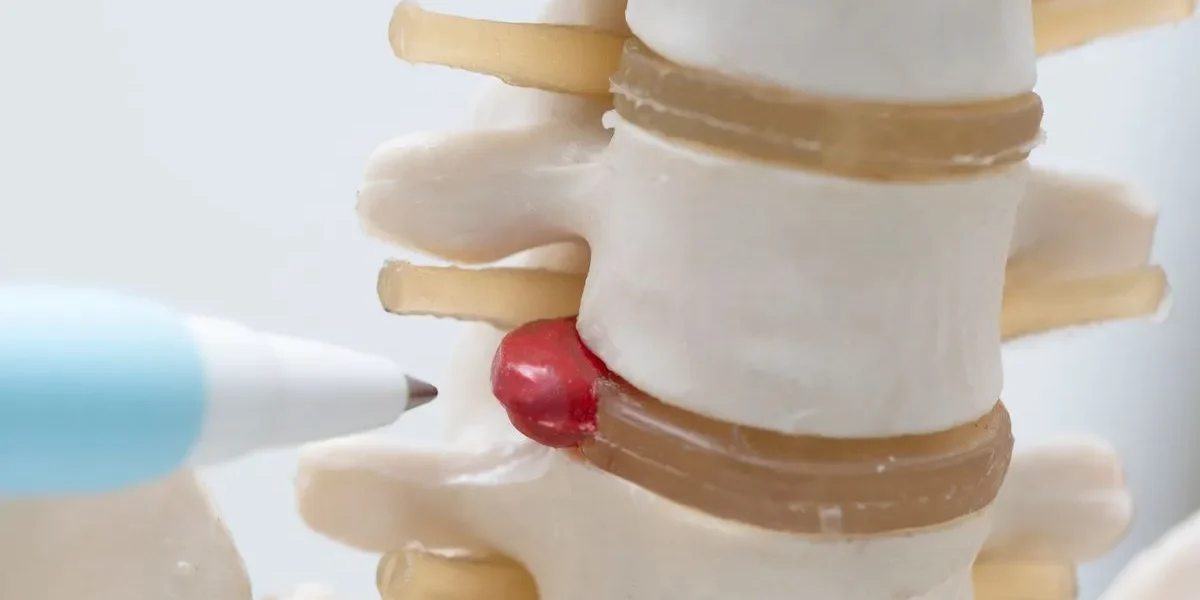
Back pain is one of the most common reasons people seek medical care, and two spinal conditions that are frequently mentioned are herniated discs and bulging discs. Although these terms are often used interchangeably, they are not exactly the same condition.
Understanding the difference between a bulging disc and a herniated disc is important because each condition can affect the spine differently and may require different treatment approaches. While some people experience only mild discomfort, others develop severe nerve pain, numbness, or mobility problems that interfere with daily life.
Learning how these conditions develop can help patients better understand their symptoms and when it may be time to seek professional evaluation.
Understanding the Role of Spinal Discs
The spine is made up of bones called vertebrae, and between each vertebra sits a soft spinal disc. These discs act like cushions or shock absorbers that help the spine move comfortably and absorb pressure during everyday activities.
Each disc contains:
- a softer inner center
- a stronger outer layer
Over time, age, wear and tear, repetitive strain, or injury can weaken the disc structure. When this happens, the disc may begin changing shape or pressing against nearby nerves.
This is where bulging discs and herniated discs can develop.
What Is a Bulging Disc?
A bulging disc occurs when the outer layer of the disc weakens and begins pushing outward beyond its normal position.
Think of it like a tire that slightly expands outward under pressure but remains mostly intact.
With a bulging disc:
- the outer layer usually remains unbroken
- the disc extends outward more evenly
- the bulge may place pressure on nearby nerves
Bulging discs are actually quite common, especially as people age. Some individuals never experience symptoms at all, while others develop pain or stiffness depending on the location and severity of the bulge.
Symptoms of a Bulging Disc
A bulging disc may cause:
- localized back pain
- stiffness
- soreness
- muscle tightness
- mild nerve irritation
If the bulging disc begins pressing on nearby nerves, symptoms can also include:
- tingling
- numbness
- radiating leg or arm pain
- weakness
However, many bulging discs remain relatively mild and manageable with conservative treatment.
What Is a Herniated Disc?
A herniated disc is generally more serious than a bulging disc.
With a herniated disc, the outer layer of the disc develops a tear or rupture, allowing part of the softer inner material to push outward.
This inner material can directly irritate or compress nearby nerves, often causing more intense symptoms.
Herniated discs are sometimes referred to as:
- slipped discs
- ruptured discs
- protruding discs
Although the names vary, the main issue is that disc material has moved outside its normal space and is affecting nearby structures.
Symptoms of a Herniated Disc
Herniated discs often create more severe nerve-related symptoms than bulging discs.
Patients may experience:
- sharp or shooting pain
- burning sensations
- sciatica
- numbness
- tingling
- muscle weakness
- pain radiating into the arms or legs
For example:
- a lower back herniation may cause pain down the leg
- a neck herniation may create symptoms in the shoulder or arm
The location of symptoms depends on which spinal nerves are affected.
Key Difference Between the Two
The simplest way to understand the difference is this:
Bulging Disc
- disc pushes outward
- outer layer remains mostly intact
- often less severe
Herniated Disc
- outer layer tears or ruptures
- inner disc material pushes outward
- more likely to compress nerves
Both conditions can range from mild to severe, but herniated discs are more commonly associated with significant nerve pain and neurological symptoms.
What Causes These Conditions?
Both bulging and herniated discs may develop due to:
- aging
- repetitive strain
- poor posture
- heavy lifting
- injury
- prolonged sitting
- natural disc degeneration
As discs lose hydration and flexibility over time, they become more vulnerable to damage.
Some people develop symptoms gradually, while others experience sudden pain after lifting or twisting movements.
Do All Disc Problems Require Surgery?
No. Many patients improve successfully through conservative treatment without surgery.
Common non-surgical treatments include:
- physical therapy
- stretching
- anti-inflammatory medication
- exercise programs
- spinal injections
- posture correction
- activity modification
Some herniated discs may even shrink naturally over time as inflammation decreases.
However, surgery may become necessary if symptoms continue worsening or if nerve compression becomes severe.
Warning Signs That Should Not Be Ignored
Patients should seek professional evaluation if they experience:
- worsening leg or arm pain
- numbness
- muscle weakness
- difficulty walking
- balance problems
- chronic pain affecting daily life
Severe nerve compression should never be ignored because prolonged pressure on spinal nerves may sometimes lead to lasting weakness or chronic nerve irritation.
Modern Spine Treatment Has Evolved
Many people still associate spine surgery with large incisions and lengthy recovery periods. However, minimally invasive spine care has changed significantly in recent years.
Experts at Inspired Spine specialize in advanced minimally invasive spine procedures designed to help patients reduce pain, improve mobility, and recover with less disruption to surrounding tissue compared to traditional open surgery approaches.
Modern treatment options now provide many patients with alternatives that may support faster recovery and improved quality of life.
Early Evaluation Can Make a Difference
One of the biggest mistakes patients make is waiting too long before seeking evaluation.
Some individuals continue living with worsening symptoms for months or years, hoping the condition will improve on its own. Early diagnosis may help:
- preserve mobility
- prevent worsening nerve compression
- improve treatment outcomes
- expand non-surgical treatment options
The sooner the underlying spinal problem is identified, the easier it may be to manage symptoms effectively.
Although bulging discs and herniated discs are similar, they are not identical conditions. A bulging disc occurs when the disc extends outward while remaining mostly intact, whereas a herniated disc involves a tear that allows inner disc material to press against nearby nerves.
Both conditions can cause pain and mobility problems, but herniated discs are often more likely to create severe nerve-related symptoms. Understanding the difference can help patients recognize when persistent pain, numbness, or weakness may require professional spinal evaluation and treatment.









Leave a Reply