

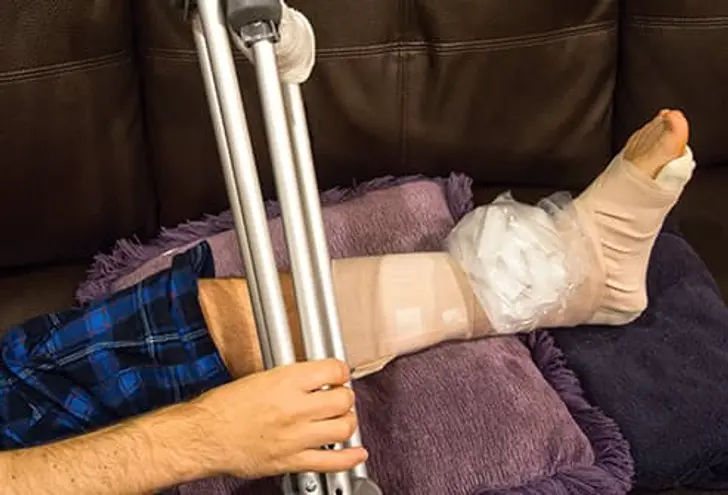
Chronic foot and ankle pain isn’t just pain that sticks around. It’s usually a sign that the body’s repair process has stalled in a loop of low-grade inflammation that damages tissue faster than it can regenerate. Plantar fasciitis, Achilles tendonitis, and peripheral neuropathy all share this pattern. The condition starts as an acute injury, the inflammation never fully resolves, and the tissue becomes progressively more compromised.
This is why traditional approaches so often disappoint. A cortisone injection can quiet symptoms for weeks, sometimes months. But it doesn’t restart the healing cycle. It suppresses it. For a lot of patients, that difference only becomes obvious after the third or fourth injection stops working.
How Advanced Technology Restarts the Healing Process
This is where the benefits of modern, non-invasive modalities come into play. Photobiomodulation, the process by which specific light wavelengths interact with cells at the cellular level, goes far beyond those low level laser devices you might have seen in a clinic a decade ago. The high power systems are able to penetrate the dense musculoskeletal structures of the foot and ankle in a way that surface-level treatment simply can’t reach.
Lightforce laser therapy as an example, works by stimulating ATP production within damaged cells and promoting vasodilation in the surrounding tissue. This results in the repair process being accelerated, as opposed just reducing pain signals. This distinction is important, the treatment is biologically doing work, not just providing relief. Shockwave therapy (ESWT) functions along a different mechanical path but seeks to achieve a similar goal, breaking the cycle of chronic inflammation and putting the tissue in an active state of repair.
There are no incisions, no anesthetic and no significant recovery time for either modality. The difference to someone that has been limping through mornings for the past two years because of plantar fasciitis is meaningful.
The Problem With Masking Pain Instead of Fixing Tissue
NSAIDs and corticosteroids have their place, but they’re blunt tools for a precise problem. Chronic soft tissue injuries involve structural breakdown at a cellular level, disrupted collagen fibers, reduced ATP production, and impaired circulation to areas of the foot that already have limited blood supply. Suppressing inflammation without addressing those underlying changes leaves the tissue in a weakened state.
We’re seeing a genuine shift in how podiatrists think about these conditions. Chronic foot pain affects approximately 24% of adults over 45, significantly impacting mobility and quality of life (Journal of Foot and Ankle Research). That’s a substantial patient population that has largely been managed with temporary relief rather than tissue regeneration. The goal now is to give the body what it needs to actually finish healing.
Why Treatment Needs to be Multi-Modal
No single solution can effectively address chronic foot pain. The physiological healing facilitated by laser or shockwave therapy must be reinforced by structural adjustments. Otherwise, the same biomechanical tensions that led to the initial injury will continue to impact the healing tissue.
Gait analysis is the component that most patients are unaware of. The way the foot bears weight while walking or running directly determines where stress is located. Custom orthotics respond to those weight-distribution patterns in a mechanical way, relieving pressure on the clinically treated area. Changes in footwear also contribute to this. Altering the shoes, in combination with regenerative treatment and structural support, is not just a best practice, but it could be the difference between one patient’s full recovery and another patient facing the same diagnosis who doesn’t fully recover.
To treat chronic problems, lifestyle changes are required, rather than one treatment session. The body’s inflammatory reaction has not functioned effectively for several months or years. Relearning that reaction necessitates repetition. The cumulative results are achieved per session, and most patients experience meaningful differences between the second and fourth weeks, with more improvements expected in each session.
The Surgery Comparison Most Patients Don’t Consider
Surgery to address issues such as chronic plantar fasciitis or Achilles tendon degeneration comes with actual risks, like infection, nerve damage, or the creation of scar tissue, and can entail recovery periods of six months or longer. More importantly, for most people, surgery doesn’t produce a better result in terms of what they’re actually able to do than what a well-constructed non-surgical program can achieve.
Today, the return-to-work and return-to-activity windows with some of the more modern, less invasive processes are just so much smaller. Patients with physically demanding careers or who play sports can often be back to full activity in weeks instead of months. That’s not just a matter of convenience; for a lot of folks, it’s the difference between an available treatment and one that feels unrealistic because they simply can’t step away from their lives for that long.












Leave a Reply