

Your teeth aren’t as stationary as they feel. They reside in a bone socket, gripped by lasso-like ligament fibers that slowly stretch and adapt over time, and this constant slight mobility explains why your bite in middle age is seldom identical to what it was in early adulthood. For most people, it is the lower front teeth that start to get crowded, or the sudden appearance of a gap opening up between two teeth that is always met without pause, and the temptation to think that something has slipped.
In fact, it is simply biology at work. The good news is that once you understand the process and pressure points, there’s a lot you and your dentist can do to slow it down or correct it.
Why A Dental Checkup Catches What Your Mirror Can’t
Most people won’t notice tooth movement until it’s visible, and by then the underlying bone loss or gum damage has usually been progressing for a while. This is why routine visits matter so much for adults, not just for cavity checks but for tracking the slower structural changes happening beneath the surface.
A thorough dental health checkup typically includes digital X-rays and bite mapping that can pick up bone density changes and micro-movements long before they show up as a visibly crooked smile. Dentists compare these images over time, looking for subtle shifts in root position or gaps forming between teeth that weren’t there a year or two earlier. Catching these changes early gives far more treatment options than waiting until the shift is obvious to everyone, including you.
If it’s been a while since your last visit, booking an assessment with a dentist chigwell clinic is a reasonable place to start, particularly if you’ve noticed any new spacing, crowding, or jaw discomfort. A professional can map your current bite against previous records and flag whether preventive measures, like a retainer or nightguard, would help before things progress further.
The Biological Reality Of Mesial Drift
Each tooth is held in place by an elastic attachment – a periodontal connective tissue that attaches the tooth to the bone rather than a solid immovable connection. This allows the tooth to move ever so slightly as you chew. Over time all of that movement adds up and the teeth shift. The front teeth overlap because the underlying bone and gum have shifted and cannot hold the teeth in place in the desired location.
Mesial drift specifically refers to the natural tendency of teeth to migrate forward, toward the front of the mouth, over the course of a lifetime. This isn’t random: the forces of chewing are angled slightly, and each tooth nudges the one in front of it, creating a slow chain reaction that travels all the way along the arch. Because the lower front teeth sit at the very end of that chain with nowhere left to go, they’re usually the ones that end up crowded or overlapping, absorbing decades of accumulated pressure from every tooth behind them.
How Aging Jawbones Lose Their Grip
The bone that holds your teeth, the alveolar bone, doesn’t lock in place, nor is it structurally different from the rest of your bones. It’s constantly being resorbed or recreated, with the absorptive cells called osteoclasts and the bone-forming cells called osteoblasts fused together in an equilibrium.
As you age, however, the scale tips in favor of resorption. The bone density and volume around the roots of your teeth is gradually decreasing in your jaw ridges. And it’s this bone mass that helps to anchor the teeth in place while bearing the brunt of the lateral pressure they undergo when biting and chewing.
Periodontal Disease Is The Real Driver Behind Adult Tooth Movement
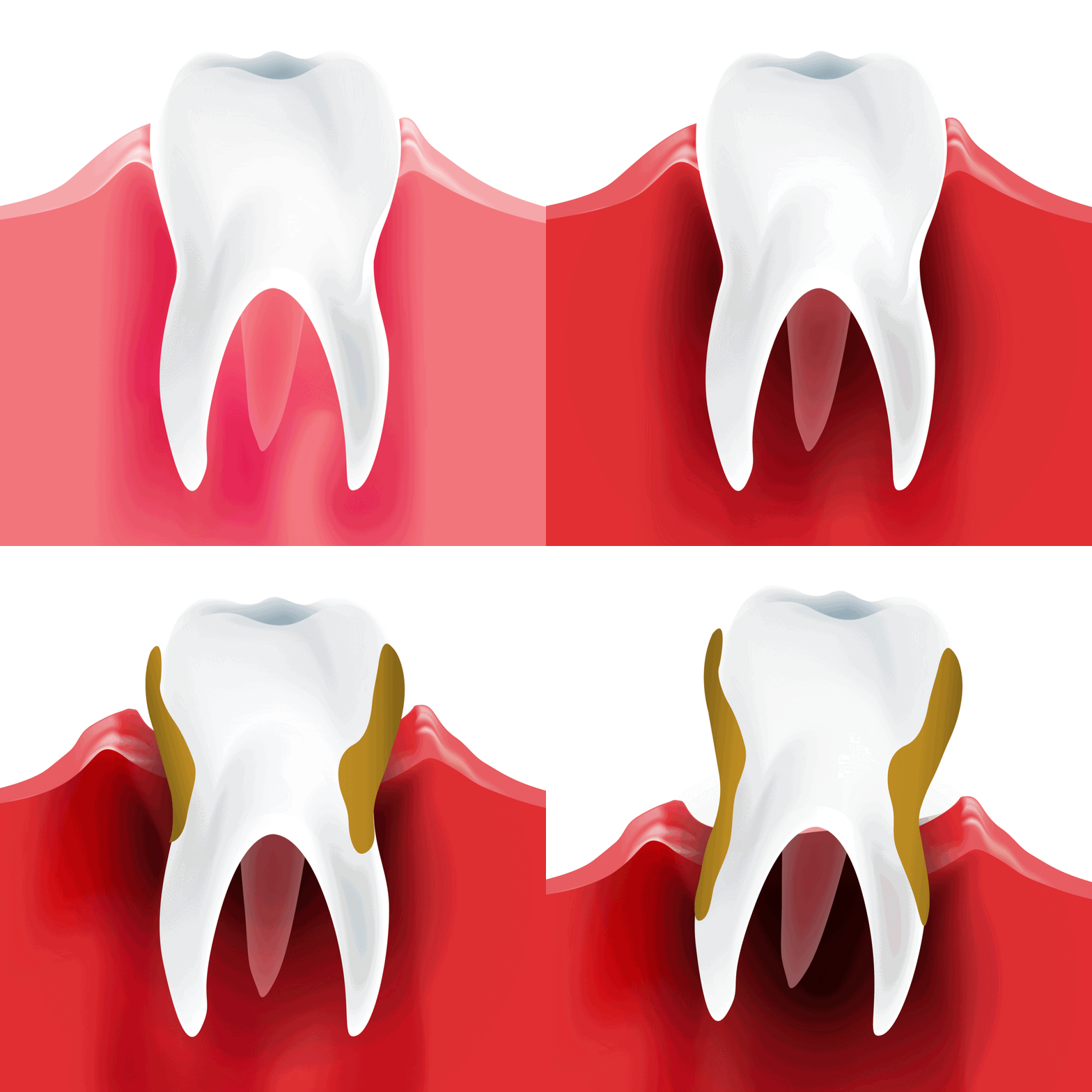
If we had to point to one reason above all others that gets your teeth moving faster than anything else, we’d say gum disease. Periodontitis is this chronic infection that loosens and eventually destroys the periodontal ligament holding teeth in place while also eating away at the cushiony alveolar bone that embeds the tooth roots. Lose enough bone, or allow it to become less dense, and the teeth can rapidly shift in random, often unsightly ways. This can happen in months rather than years once the underlying structure that keeps teeth anchored gets compromised.
What makes periodontal disease so alarming is how common it is. The CDC estimates that about 47.2% of adults over 30 have some form of it, rising to over 70.1% in adults 65 and older.
It’s worth understanding why so many older adults have shifted, gapped, or uneven teeth. The usual assumption is that it’s just a natural consequence of aging, or lingering effects of wisdom teeth crowding earlier in life. But in many cases, the real driver is untreated gum disease – starting as gingivitis and progressing to periodontitis – which breaks down the bone and tissue that hold teeth in place, allowing them to drift over time.
Grinding, Wear, And The Gaps That Open Up Over Decades
Teeth come into contact with each other at highly specific points of contact, and those points wear down minutely with every year of chewing. Multiply that wear over many years, add in bruxism (the name for habitually clenching or grinding teeth), and that wear accelerates dramatically. People will often brux at night, meaning they may go entire decades without realizing they’ve been doing it – but their partner hears the grinding sounds or their dentist sees the characteristic flattening of the biting surface.
This attrition of enamel creates microscopic space between teeth that previously didn’t exist. Neighbor teeth, under the natural forward pressure of mesial drift, will start to move slightly into that newly created space. The end result is teeth that have “moved” when in reality they are simply being pushed to take up the space of neighboring teeth which have been ground down by bruxism. If left unchecked, bruxism can also cause strain in the jaw joint itself – leading to temporomandibular joint disorder, with its own separate pain and clicking symptoms apart from the tooth movement.
The Domino Effect Of A Single Missing Tooth
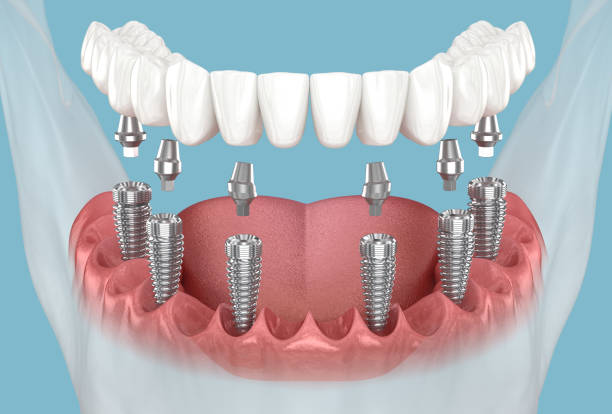
Losing a back tooth and not replacing it triggers a reaction that is more powerful than we think. The teeth on both sides of the space no longer have anything to support them, so they begin to tip over in the direction of the empty space. Meanwhile, the tooth that is directly opposite the space, since it no longer contacts anything when closing the mouth, becomes excessively extruded and begins to grow slightly outside its alveolar bone in its attempt to find a contact point.
Both movements destabilize the bite. The adjacent teeth become more difficult to clean because they are no longer in direct contact with other teeth, and the altered occlusion may alter the pressure response in the entire arch. And all this because of a missing back molar, which can become something very different in perception over several years.
Back molar loss is a big factor in bite collapse, which leads to a reduction in the vertical support of the face and allows the anterior teeth to lean outward.
Why Your Old Braces Are Losing The Battle
If you had braces as a teen and did not use a retainer, you have surely realized some backward movement. It is what we call orthodontic relapse, which is due to the fact that the ligament fibers around a tooth keep a “memory” of its position. You move a tooth to a new position, and those fibers continue to gently pull it back to its original location for years, sometimes indefinitely, unless something blocks the tooth in place.
A lingual retainer, a thin wire permanently glued to the back of the front teeth, is one of the best solutions in this context. The removable retainers also work, but only if they are used regularly, and most adults will readily admit that this habit quickly disappears once the teeth “look good.”
The Health Risks Hiding Behind Crooked Teeth
One could be under the impression that moving teeth isn’t a big deal beyond aesthetics. But the fact is, crowded and overlapping teeth lead to the formation of tight, inaccessible spaces where floss isn’t effective in removing plaque and bristles of a brush can’t reach the points of contact.
Plaque accumulates much more quickly in those tight spaces than it does on flat, well-contoured surfaces. Eventually, the risk of localized decay along with a significantly inflamed gum that spreads to the periodontal disease pushing for more movement, increases. This creates a vicious cycle; moving teeth lead to cleaning issues, cleaning issues lead to gum disease, and gum disease furthers the movement of teeth.
Practical Treatment Options For Adult Teeth Shifting
However, that doesn’t mean that you should just live with shifting teeth. Modern dentistry offers several simple solutions to help treat the problem, and in many cases, they’re less invasive than you might think.
For grinding-related wear and tear, a custom nightguard is designed to absorb the damaging lateral force from bruxism, protecting your teeth and your jaw joint. Teeth with small gaps that have slowly spread can often be closed using cosmetic bonding, which involves no drilling as it simply sculpts the tooth surface. When the crowding or drift is more severe and noticeable, clear aligners are growing in popularity for adults because they are virtually invisible and can steadily guide your teeth back into alignment over the course of several months.
The professional cleaning treatment known as dental prophylaxis that eliminates tartar from beneath the gumline is still one of the best and simplest ways to slow the bone loss that leads to tooth mobility. As long as it is combined with a well-fitting retainer for people who have had orthodontic work, you get most common causes of adult tooth movement covered with no need for any drama.
Here’s the point that often gets lost both on the message boards and in chat with people who’ve noticed their teeth shifting: your bite changes for your entire life. The part you get to control is whether those changes happen safely and quietly, tracked and managed all the while, or whether they hit you one day as a surprise when you can no longer floss between two teeth that once sat perfectly together. Regular checkups, honest conversation about grinding or retainer slack with your dentist, and swift replacements for any lost teeth go a long way toward keeping your bite functional long after retirement.













Leave a Reply